I still remember my first week at my corporate job.
Fresh out of university,
I was thrilled to have my own desk, dual monitors, and an ergonomic chair that cost more than my monthly grocery budget.
What I didn't realize was that this comfortable setup would become my prison for the next eight hours a day, five days a week.
Fast forward three years, and I was dealing with chronic back pain, had gained 15 pounds despite eating relatively well, and found myself exhausted by 3 PM every single day.
My doctor's words hit hard: "Your lifestyle is aging you faster than you think."
If you're reading this from your office chair right now, you might want to pay attention.
Because what I learned about desk jobs and health transformed not just my workday, but my entire life.
The Silent Epidemic Nobody's Talking About
We've all heard the dramatic headline: "Sitting is the new smoking."
While that comparison might be a bit sensationalized, the research behind it isn't wrong.
A 2019 study published in the Journal of the American Medical Association found that adults who sit for prolonged periods have a significantly higher risk of premature death from all causes.
But here's what makes desk jobs particularly insidious: the damage accumulates slowly.
Unlike a sports injury that announces itself with immediate pain, the health consequences of sitting for eight hours a day creep up on you over months and years.
By the time you notice something's wrong, the habits are deeply ingrained and the physical changes well underway.
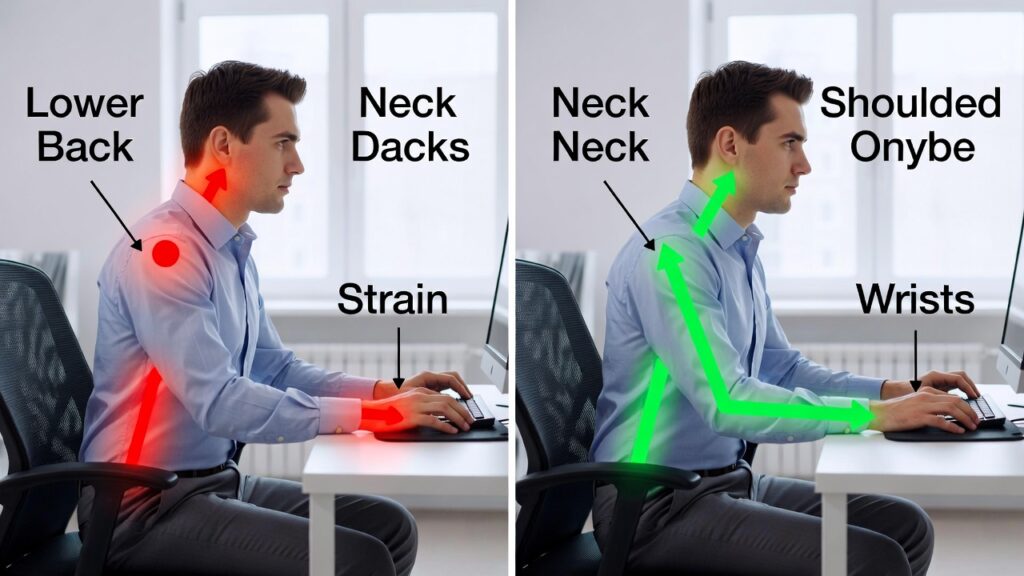
Your Spine Wasn't Designed for This
Let's start with the obvious one: your back.
The human spine has a natural S-curve that's designed to distribute weight evenly when you're standing or walking.
When you sit, especially with poor posture, this curve flattens or reverses, placing enormous pressure on your lower back discs.
After sitting for just 20 minutes,
the pressure on your spinal discs increases by up to 40%. Imagine carrying a backpack that gets heavier every hour you sit.
That's essentially what's happening to your spine. Over time, this constant compression can lead to herniated discs, chronic pain, and reduced mobility.
I learned this the hard way when I bent down to pick up a pen one ordinary Tuesday morning and felt a sharp pain shoot through my lower back.
What should have been a simple movement became impossible because my spine had weakened from years of constant sitting.
The Metabolic Slowdown You Can't See
Here's something that surprised me: sitting isn't just passive inactivity.
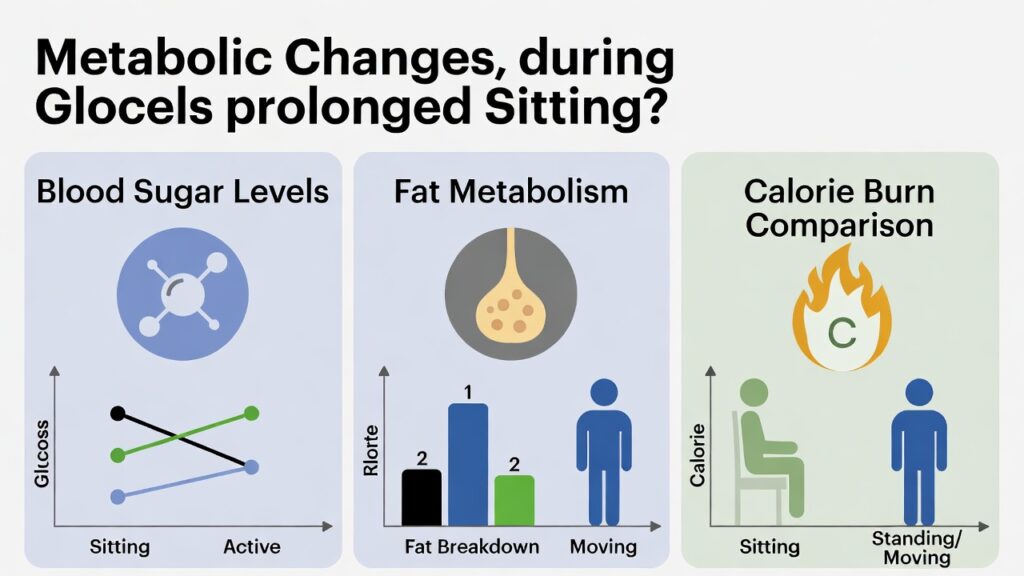
It actively changes your body's metabolism. Within 90 minutes of sitting, your metabolic rate drops significantly, and your body's ability to break down fat decreases by 90%.
Your muscles, particularly the large leg muscles, need regular contraction to effectively process blood sugar and triglycerides.
When you sit, these muscles go dormant. Even if you exercise for an hour before work, those benefits can be partially negated by eight hours of continuous sitting afterward.
This metabolic slowdown contributes to weight gain, increased cholesterol levels, and a higher risk of type 2 diabetes.
A study from the University of Leicester found that people who sit for prolonged periods have a 112% increased risk of diabetes and a 147% increased risk of cardiovascular events compared to those who sit less.
The weight gain isn't just about calories in versus calories out.
When I started tracking my daily movement, I was shocked to discover that on office days, I was burning 300-400 fewer calories than on my days off, even though my diet remained identical.
Your Cardiovascular System Takes a Hit
Your heart is a muscle, and like all muscles, it functions best when your body is active.
Prolonged sitting causes blood to pool in your legs, forcing your heart to work harder to circulate blood throughout your body.
This increased workload, combined with reduced calorie burn and elevated blood sugar levels, creates a perfect storm for cardiovascular problems.
Research from the American Heart Association shows that people who sit for more than five hours per day have double the risk of heart failure compared to those who sit for less than two hours.
Even more concerning, this risk remains elevated even among people who exercise regularly.
I noticed the cardiovascular effects during my annual health checkup.
Despite being in my early thirties and maintaining a relatively healthy diet, my cholesterol had crept into the borderline high range, and my resting heart rate had increased. My doctor explained that my sedentary workday was likely the culprit.
Mental Health: The Overlooked Consequence
Physical health gets most of the attention, but the mental health impacts of desk jobs are equally serious.
Extended periods of sitting and indoor work have been linked to increased rates of anxiety and depression.
A study published in the American Journal of Preventive Medicine found that women who sat for more than seven hours per day were 47% more likely to show symptoms of depression than those who sat for four hours or less.
There are several factors at play here.
Reduced physical activity decreases the production of endorphins, your brain's natural mood elevators.
Limited exposure to natural light disrupts your circadian rhythm and can lead to seasonal affective disorder-like symptoms, even in summer.
The physical discomfort from prolonged sitting can create a constant low-level stress response in your body.
I experienced this firsthand during a particularly demanding project that kept me glued to my desk for weeks.
I felt increasingly anxious, had trouble sleeping, and found myself snapping at my partner over minor issues.
It wasn't until I forced myself to take regular breaks and walks that I realized how much my desk-bound routine was affecting my mood.

The Eye Strain Epidemic
If you're like most office workers, you probably spend 6-8 hours staring at a computer screen, then several more hours looking at your phone.
This constant screen time creates a condition called Computer Vision Syndrome, affecting up to 90% of people who work on computers for more than three hours daily.
The symptoms include dry eyes, blurred vision, headaches, and neck pain.
Your eyes aren't designed to focus on a fixed distance for extended periods. When you stare at a screen, your blink rate decreases by up to 60%, causing your eyes to dry out.
The blue light from screens can also disrupt your sleep patterns by suppressing melatonin production.
I used to end every workday with a pounding headache and burning eyes. I assumed it was just stress, but it was actually eye strain.
Once I started following the 20-20-20 rule (every 20 minutes, look at something 20 feet away for 20 seconds), the headaches became less frequent.
Musculoskeletal Problems Beyond Back Pain
While back pain gets the spotlight, desk jobs affect your entire musculoskeletal system.
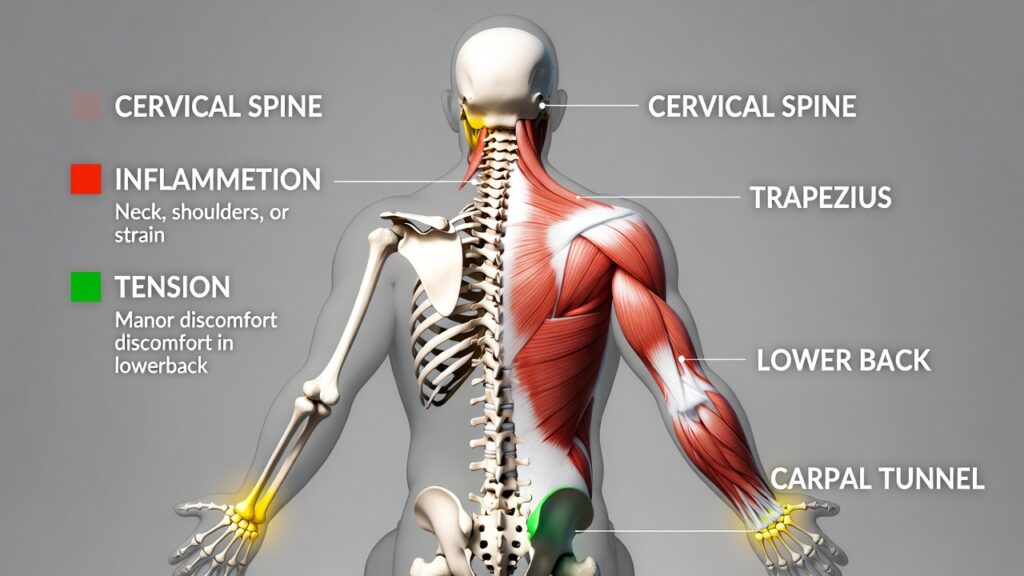
Sitting with rounded shoulders and a forward head position strains your neck muscles and can lead to tension headaches.
The average adult head weighs about 10-12 pounds, but for every inch your head moves forward from its neutral position, it adds an additional 10 pounds of pressure on your neck.
Your wrists suffer too, especially if you type frequently. Carpal tunnel syndrome and repetitive strain injuries are epidemic among office workers.
These conditions develop gradually as the constant typing, clicking, and awkward wrist positions compress the median nerve.
Even your hips get tight from prolonged sitting. The hip flexor muscles shorten and tighten, which can lead to lower back pain and reduced mobility.
I noticed this when I tried to go for a run after work one day and found my stride felt restricted and uncomfortable.
The Immune System Connection
Here's something most people don't know: prolonged sitting can weaken your immune system.
Physical activity is crucial for proper lymphatic circulation.
Unlike your cardiovascular system, which has the heart to pump blood, your lymphatic system relies on muscle movement to circulate lymph fluid throughout your body. This fluid is essential for immune function.
When you sit for extended periods, lymphatic circulation slows down, potentially making you more susceptible to infections and illness.
Additionally, the stress and poor posture associated with desk work can trigger inflammation in your body, further compromising immune function.
During my most sedentary years, I noticed I caught every cold that went around the office.
I'd miss several days of work each winter due to illness. It wasn't until I started incorporating more movement into my day that I realized my desk job was likely suppressing my immune system.
Digestive Issues You Might Not Connect to Your Desk
Sitting for long periods can also affect your digestive system.
When you sit, your organs compress, slowing down digestion and potentially causing bloating, heartburn, and constipation.
The lack of movement means food moves more slowly through your intestines, which can lead to discomfort and irregular bowel movements.
Many office workers also develop poor eating habits, eating lunch at their desks while continuing to work.
This means eating quickly, not chewing properly, and not giving your body the signal to properly digest food.
The stress of work can also increase cortisol levels, which further disrupts digestion.
I struggled with uncomfortable bloating and irregular digestion for years before realizing the pattern: my symptoms were always worse on workdays and improved on weekends when I was more active.
Taking Action: Small Changes That Make a Big Difference
After learning all of this, I made some changes that transformed my health without requiring me to quit my job or completely overhaul my life. Here's what actually worked:
I started setting a timer to stand up and move for five minutes every hour.
This simple change dramatically reduced my back pain within weeks. I invested in a standing desk converter, allowing me to alternate between sitting and standing throughout the day.
Even standing for just 2-3 hours during my workday made a noticeable difference in my energy levels.
I began taking walking meetings whenever possible!
Not only did this increase my daily movement, but I found that walking while discussing ideas actually improved my creativity and problem-solving abilities.
My colleagues initially thought it was odd, but many of them now join me for walking discussions.
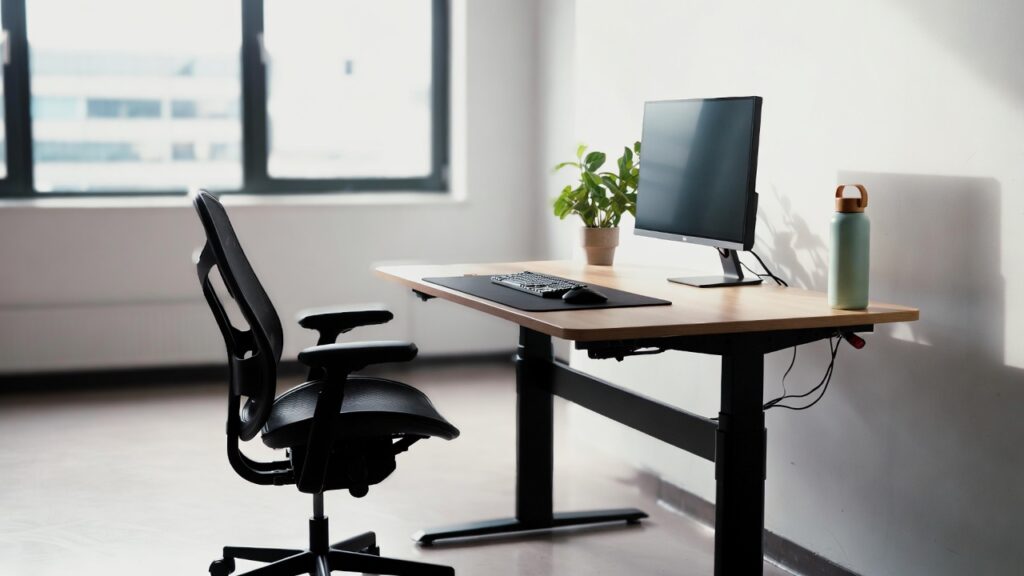
I started doing simple desk stretches every couple of hours—shoulder rolls, neck stretches, and seated spinal twists.
These took less than two minutes but helped prevent the stiffness and pain I used to experience daily. I also began a morning routine of yoga or stretching, which improved my posture throughout the workday.
For eye strain, I enabled blue light filters on all my devices and made a conscious effort to look away from my screen regularly.
I also improved the lighting in my workspace, reducing the contrast between my bright screen and dim surroundings.
The Bottom Line
Your desk job doesn't have to destroy your health, but ignoring the risks definitely will.
The key is recognizing that the default office setup and routine are fundamentally at odds with human biology.
We evolved to move, to vary our positions, to spend time outdoors. Modern office work contradicts all of that.
The good news?
You don't need to make drastic changes to see significant improvements. Small, consistent modifications to how you work can protect your health while allowing you to succeed in your career.
Standing more, moving regularly, being mindful of your posture, and taking breaks aren't signs of weakness or lack of dedication—they're necessary investments in your long-term wellbeing.
Three years after making these changes, my back pain is gone, I've lost the weight I gained in my early office years, my energy levels are stable throughout the day, and my annual health markers have all improved. I'm still at a desk job, but I've learned to work with my body instead of against it.
Your body is the only one you'll ever have. It deserves better than eight hours of daily abuse disguised as productivity. The question isn't whether your desk job affects your health—it absolutely does. The question is what you're going to do about it.
Your body is the only one you'll ever have. It deserves better than eight hours of daily abuse disguised as productivity. The question isn't whether your desk job affects your health—it absolutely does. The question is what you're going to do about it.