I stood in my bathroom at 2 AM, holding a protein bar wrapper.
The third one that night.
I'd just turned 43, and I was doing everything the internet told me to do. High protein. Low carb. Intermittent fasting. HIIT workouts that left me so sore I could barely walk my dog.
And I was gaining weight.
Not slowly either. Five pounds in two months.
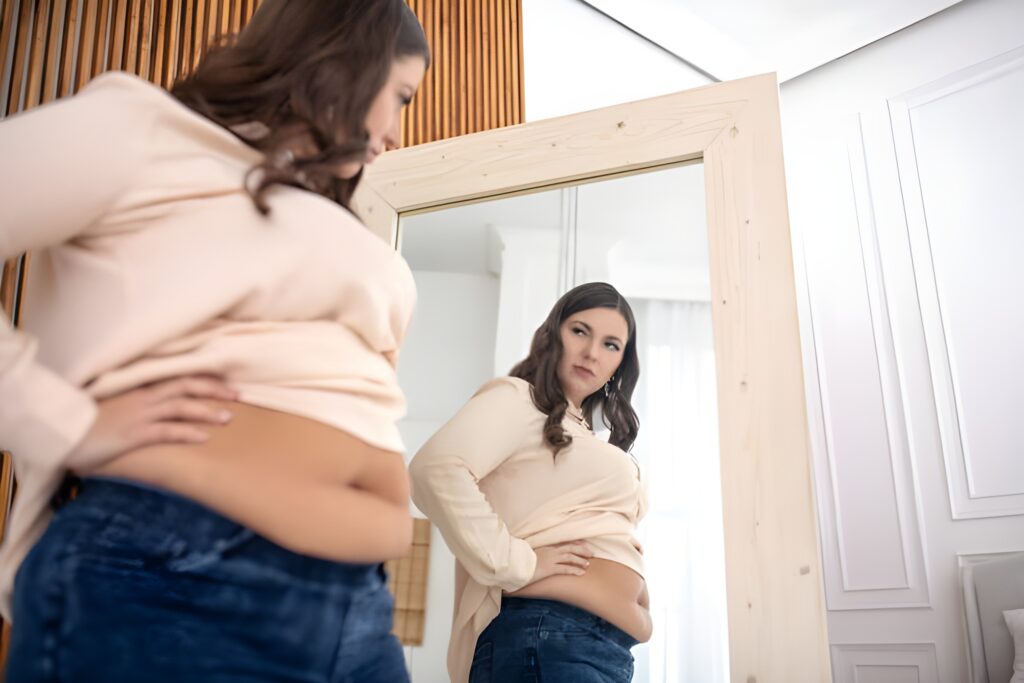
My jeans didn't fit. My face looked puffy in photos. I felt exhausted all the time, but I couldn't sleep past 4 AM anymore.
Something was very wrong.
What I Believed Would Work
I genuinely thought I just needed more discipline.
That's what all the fitness influencers said, right? "You're not trying hard enough." "Consistency is key." "No excuses."
So I tried harder. I cut my calories to 1200 a day. I worked out six days a week. I meal-prepped on Sundays. I drank a gallon of water.
I tracked everything in an app that turned red when I went over my macros.
I was doing it perfectly.
Or so I thought.
My husband would find me crying in the pantry at 9 PM, staring at a jar of almond butter like it was the enemy.
My daughter asked me why I was always tired. My best friend stopped inviting me to dinner because I'd just order a salad and then talk about how "bad" everyone else's food choices were.
I became that person.
The one who made everything about weight loss. Who couldn't enjoy anything because I was always counting, always restricting, always feeling guilty.
And still. Nothing was working.
The Signs I Completely Ignored
Looking back, my body was screaming at me.
But I didn't want to listen. Because listening meant admitting that maybe, just maybe, what worked in my 20s wasn't going to work at 43.
My period became irregular. Then it disappeared for three months.
When I mentioned it to my doctor, she said it was "probably perimenopause" and handed me a pamphlet.
I threw the pamphlet away. I wasn't ready to accept that.
My hair started thinning. Not dramatically, but enough that I noticed more in my brush. More in the shower drain. My hairstylist gently suggested I try volumizing products.
I bought them. But I didn't connect the dots.
My skin got weird. Dry patches on my elbows. Breakouts on my jaw that wouldn't go away.
My dermatologist prescribed retinol. I used it. But again I didn't stop to think about why this was all happening at once.
The biggest sign? My body temperature.
I was always cold. Even in summer. I'd wear a cardigan to outdoor barbecues.
My hands and feet felt like ice. My husband joked that sleeping next to me was like sleeping next to a corpse.
I laughed. But it wasn't funny.
The Night I Finally Stopped
It was a Tuesday.
I remember because Tuesdays were my "cheat meal" day though I never actually enjoyed them because I'd already planned exactly how I'd "make up for it" on Wednesday.
I was sitting at the dinner table, eating grilled chicken and steamed broccoli. Again. My family was having pasta. Real pasta. With garlic bread.
My daughter looked at me and said, "Mom, why don't you ever eat normal food anymore?"
And I froze.
Because I couldn't answer her. I didn't know.
I'd been operating on autopilot for months. Following rules I'd found online. Rules written by 25-year-old fitness influencers who'd never experienced hormonal changes.
Who'd never felt their metabolism shift overnight. Who'd never woken up exhausted despite sleeping eight hours.
That night, I did something I'd been avoiding for months.
I googled "weight loss for women over 40."
Not the usual "10 best exercises" or "fat-burning foods" articles. I actually read. Medical articles. Studies. Real stories from women my age.
And I realized something that felt both devastating and relieving:
I wasn't failing. My approach was.
What Actually Changed Everything
The next morning, I stopped tracking calories.
I know. Sounds reckless. But hear me out.
I started focusing on something else entirely my hormones. Not in the way that trendy wellness blogs talk about "balancing your hormones" with green juice and yoga.
I mean actually understanding what was happening in my body. Estrogen dropping. Cortisol spiking. Thyroid slowing down. Insulin resistance creeping in.
After 40, our bodies don't respond to stress the way they used to. And what was I doing?
Stressing my body with extreme restriction and overexercise. I was literally making it worse.
I made some changes. Quietly. Without announcing them to anyone.
First, I started eating more. Not junk food. But real food. Protein at every meal, yes but also carbs.
Sweet potato. Rice. Actual bread sometimes. And fat. Real fat. Olive oil. Avocados. Nuts I didn't have to measure out on a scale.
My weight went up two pounds in the first week. I almost panicked. Almost went back to restriction.
But I didn't.
Second, I cut my workouts in half. Instead of six brutal HIIT sessions a week, I did three moderate strength training sessions. And I walked. Just walked. Sometimes with a podcast. Sometimes with nothing at all.
I felt guilty at first. Like I was being lazy.
But within two weeks, something shifted. I slept better. My face didn't look as puffy. My hair stopped falling out as much.
Third and this one was hard I stopped weighing myself every day. I hid my scale in the closet. I took photos instead. Just for me. Once a month.
The hardest part? Relearning what my body actually needed.
I'd spent so long following external rules that I'd completely lost touch with my own hunger cues. I didn't know if I was actually hungry or just bored.
Tired or actually underfed. Craving sugar because I was stressed or because my body legitimately needed quick energy.
It took weeks to figure that out. Maybe months, honestly.
But slowly, things started changing. Not in the dramatic "I lost 30 pounds in 30 days" way that gets clicks online. In quieter ways.
My energy came back. My sleep improved. My period returned. My skin cleared up. The puffiness in my face went down.
My energy came back. My sleep improved. My period returned. My skin cleared up. The puffiness in my face went down.
But here's the thing by the time I lost it, I almost didn't care anymore. Because I felt so much better that the number on the scale seemed less important.
What I Know Now That I Wish I Knew Then
Weight loss after 40 is not about trying harder.
It's about working with your body instead of against it.
I spent months punishing myself for gaining weight. Blaming myself for "lacking willpower."
When really, my body was just trying to survive in a hormonal environment that had completely changed.
Eating 1200 calories a day wasn't making me lose weight.
It was signaling to my body that resources were scarce. So it held on to every calorie. It slowed my metabolism. It made me tired so I'd move less.
Over-exercising wasn't "speeding up my metabolism." It was raising my cortisol. Which made my body store fat around my middle.
Which made me crave sugar. Which made me feel like a failure when I inevitably gave in.
I wasn't broken. The method was.
Now I eat probably 1800-2000 calories a day. I lift weights three times a week. I walk my dog twice a day. I sleep seven to eight hours. I have wine on Friday nights if I want it.
And I'm smaller than I was when I was starving myself.
Go figure.
The Thing Nobody Tells You
There's no perfect plan.
I know. Not the satisfying answer you wanted.
But it's the truth. What works for your friend might not work for you. What worked for you at 30 might not work now. And that's not your fault.
Your body is different now. Your hormones are different. Your stress levels are probably different. Your sleep is different. Your digestion is different.
Everything is different. So the approach has to be different too.
I wasted six months trying to force my 43-year-old body to respond like my 28-year-old body.
And all it got me was exhaustion, hair loss, and a really unhealthy relationship with food.
If you're reading this at 2 AM, holding a protein bar wrapper and wondering why nothing is working...
It might not be you. It might be the plan.
Where to Start (If You Want To)
I'm not going to give you a meal plan. Or a workout routine. Because honestly, I don't know your body.
I don't know your hormones. I don't know what's actually going on beneath the surface.
But I do know this: if you've been struggling with weight loss after 40, there's a good chance your approach needs to shift.
Not because you're doing something wrong. But because your body has new needs now.
I found this free quiz that actually helped me understand my metabolic type and what my body might need. It's not one of those "lose 10 pounds in 10 days" gimmicks. Just a simple assessment that looks at your specific situation.
It took me three minutes. And honestly? It gave me more insight than months of generic advice ever did.
If you take it, you'll get some personalized suggestions based on your age, your metabolism, and what's actually going on with your body right now. Not what worked for someone else. What might work for you.
No pressure. But if you're where I was exhausted, confused, and tired of feeling like you're failing—it might be worth checking out.

About the product I eventually used:
After trying dozens of approaches, I found something that actually worked with my body instead of against it.
It's called Mitolyn, and it focuses on supporting mitochondrial function and cellular metabolism which, it turns out, is kind of crucial for women over 40.
I'm not saying it's magic. Nothing is. But it's specifically designed for people whose metabolism has shifted due to hormonal changes.
It supports energy production at the cellular level, which is exactly what I needed.
If you're interested, you can check out Mitolyn here. They have a 60-day money-back guarantee, which is what convinced me to try it. Because at that point, I'd wasted so much money on things that didn't work that I needed that safety net.
But again start with understanding your body first. Take the quiz. See what it says. Then decide what makes sense for you.
I'm still figuring things out. I don't have it all together. Some weeks are better than others.
But I'm no longer standing in my bathroom at 2 AM, feeling like a failure.
And that, honestly, feels like the biggest win of all.