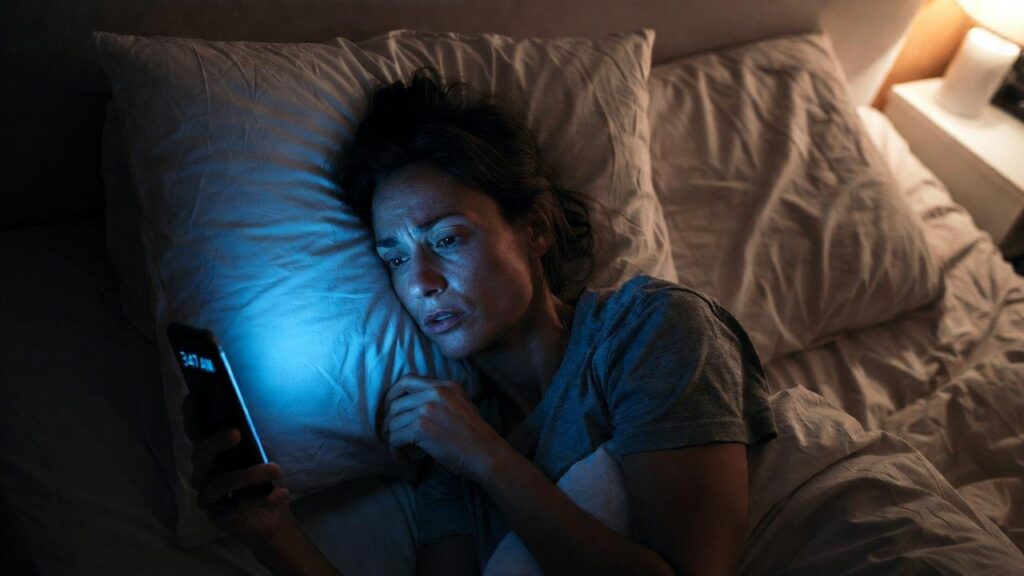
It was 3 AM, and I was staring at my ceiling again.
My mind was racing through tomorrow's presentation, that awkward conversation from three days ago, and somehow also my embarrassing moment from seventh grade. Sound familiar?
For two years, I lived in this cycle.
- Bad sleep made me anxious.
- Anxiety made me stressed.
- Stress destroyed my sleep.
Round and round it went, each night worse than the last.
I was functioning, sure, but barely. I snapped at my partner over small things, forgot important deadlines, and felt like I was watching my life through foggy glass.
Then my doctor said something that changed everything:
"Your mental health, stress levels, and sleep aren't separate problems. They're one problem feeding itself."
That conversation sent me down a research rabbit hole that eventually pulled me out of the worst period of my life.
What I learned about the connection between sleep, stress, and mental health didn't just help me sleep better it gave me my life back.
The Vicious Cycle You're Probably Stuck In
Here's what most people don't realize: sleep, stress, and mental health aren't just connected they're inseparable.
They form what researchers call a "bidirectional relationship," which is a fancy way of saying they all affect each other, all the time.
When you don't sleep well, your body produces more cortisol, the stress hormone. Higher cortisol levels make you feel more anxious and on edge.
Anxiety makes it harder to fall asleep. And the cycle continues.
I noticed this pattern in my own life. After a terrible night of sleep, I'd be irritable all day. Small problems felt massive. My boss's neutral email sounded angry.
My friend's joke felt like criticism. By evening, I was so wound up from the day's stress that falling asleep was impossible.
The scary part? This cycle gets stronger over time.
Each night of poor sleep makes you more vulnerable to stress. Each stressful day makes sleep more elusive.
Before you know it, you're trapped in a pattern that feels impossible to break.
What Sleep Deprivation Actually Does to Your Brain
When I was sleeping four to five hours a night, I genuinely thought I was handling it fine.
I'd joke about being a "night owl" or surviving on coffee. Looking back, I was a mess.
Sleep deprivation doesn't just make you tired. It fundamentally changes how your brain works.
The prefrontal cortex:
the part of your brain responsible for rational thinking and emotional regulation—basically goes offline when you're sleep-deprived.
Meanwhile, your amygdala, the fear and emotion center, goes into overdrive. It becomes 60% more reactive to negative stimuli.
This is why everything feels worse when you're exhausted. Your brain literally can't process emotions normally.
I remember crying over a slightly burnt piece of toast one morning.
Not because I was sad about the toast, but because my sleep-deprived brain couldn't handle even minor disappointment. That's when I knew something had to change.
Studies show that after just one night of poor sleep, your brain's ability to form positive memories decreases while negative memories become stronger.
You literally remember the bad stuff more and the good stuff less. No wonder insomnia and depression are so closely linked.
The Stress Hormone Spiral
Cortisol is supposed to help you.
In healthy amounts, it wakes you up in the morning and helps you respond to challenges. But chronic stress and poor sleep turn cortisol from a helpful tool into a constant problem.
When you're stressed, your body pumps out cortisol throughout the day. This should drop at night, allowing you to sleep.
But if you're chronically stressed, cortisol stays elevated. High nighttime cortisol makes it nearly impossible to fall into deep, restorative sleep.
I used to lie in bed feeling weirdly wired and tired at the same time.
My body was exhausted, but my mind wouldn't shut off. That was cortisol, keeping me in a state of alert when I desperately needed rest.
The cruel irony? Poor sleep raises your baseline cortisol levels even higher the next day.
So you're starting tomorrow already more stressed than you ended today. After weeks of this, you're essentially walking around with your body's alarm system constantly activated.
This chronic cortisol elevation doesn't just affect sleep.
It suppresses your
- immune system
- increases inflammation
- disrupts your metabolism,
and yes, significantly impacts mental health. Prolonged high cortisol is directly linked to anxiety disorders and depression.
The Anxiety-Insomnia Loop
Anxiety and insomnia are best friends, and I hate both of them.
About 70% of people with anxiety disorders also have sleep problems. And people with insomnia are ten times more likely to develop anxiety.
This connection makes perfect sense when you understand what's happening in your brain.
Anxiety activates your sympathetic nervous system:
Your fight-or-flight response. This is the exact opposite of what you need to fall asleep, which requires your parasympathetic nervous system (rest-and-digest mode) to take over.
For me, bedtime became associated with anxiety.
The moment I got into bed, my mind would start racing. I'd worry about not falling asleep, which made me more anxious, which made sleep even more impossible.
Some nights I'd be more stressed in bed than I was all day at work.
This is called "conditioned arousal," and it's incredibly common.
Your brain learns to associate your bed with stress and wakefulness instead of relaxation and sleep. Breaking this association is crucial, but it takes time and intentional effort.
The worrying thoughts themselves become self-fulfilling prophecies. You think, "I'm not going to be able to sleep tonight," and that thought creates the anxiety that ensures you won't sleep. It's maddening when you're in it.
Depression's Role in This Mess
Depression and sleep problems are so intertwined that researchers sometimes can't tell which came first.
About 75% of people with depression have insomnia, and people with insomnia are twice as likely to develop depression.
What I didn't realize during my worst period was that my sleep problems were both a symptom of and a contributor to my declining mental health.
I felt hopeless partly because I was exhausted all the time. The exhaustion made everything feel harder, which deepened my sense of helplessness.
Depression affects sleep architecture:
The structure of your sleep cycles. People with depression often have less deep sleep and more fragmented sleep. Even when they sleep for eight hours, they wake up unrefreshed because the quality is poor.
There's also something called "terminal insomnia" waking up very early and being unable to fall back asleep.
I'd wake up at 4 AM with immediate, crushing dread about the day ahead.
No amount of trying could get me back to sleep, so I'd start my day already defeated.
The relationship goes both ways -
Treating depression often improves sleep.
And improving sleep can significantly help depressive symptoms.
When I finally started sleeping better, my mood improved dramatically even before other interventions took effect.
What Actually Works: Breaking the Cycle
After understanding the problem, I desperately needed solutions. Here's what actually worked for me, backed by research and tested through my own miserable trial and error.
Creating a Sleep Sanctuary:
Your bedroom environment matters more than you think.
I transformed my bedroom from a multipurpose room where I worked, watched TV, and stressed into a space dedicated only to sleep.
I removed my TV, moved my laptop to another room, and made my bedroom as dark as possible.
I invested in blackout curtains, and it made an immediate difference. Light suppresses melatonin production, and even small amounts of light can disrupt sleep.
Temperature is crucial too. Your body needs to cool down to sleep well. I keep my bedroom between 65-68°F now.
It felt uncomfortably cold at first, but my sleep quality improved noticeably within days.
I also addressed noise. I live in a city, so I use a white noise machine to mask sudden sounds that would wake me. The consistent, gentle sound actually became a sleep cue for my brain.
These changes alone didn't fix everything, but they created the foundation for better sleep.
You can't sleep well in an environment working against you.
The Power of Routine (Even When You Don't Feel Like It)
I used to go to bed whenever I felt tired, which was sometimes midnight and sometimes 3 AM. My wake time varied just as much.
This inconsistency was destroying my sleep quality.
Setting a consistent sleep schedule was hard. Really hard. On weekends, I wanted to sleep in.
When I couldn't fall asleep, I wanted to just stay up. But consistency is what reset my circadian rhythm.
I chose a wake time I could maintain every single day even weekends and stuck to it.
For the first week, it was torture. I was exhausted but couldn't sleep in. But by week two, I started naturally getting sleepy at the right time.
Your body has an internal clock that regulates sleep, hormone production, and even mood.
When you keep irregular hours, you're constantly fighting against this clock. Aligning with it instead of against it made everything easier.
I also created a wind-down routine starting 90 minutes before bed.
No screens, no stressful activities, no heavy meals. Just calming activities like reading, gentle stretching, or listening to music. This signaled to my brain that sleep was coming.
Managing Stress Before It Manages You
You can't eliminate stress from life, but you can change how you respond to it. I learned this the hard way.
I started practicing what my therapist called "stress inoculation"—building small stress-management habits throughout the day rather than waiting until I'm overwhelmed.
For me, this meant short breathing exercises during work breaks, a quick walk at lunch, and journaling for ten minutes before dinner.
These tiny interventions prevented stress from accumulating to unmanageable levels.
Instead of reaching bedtime already maxed out on cortisol, I'd addressed stress multiple times throughout the day.
Exercise became non-negotiable, but I had to be strategic about timing.
Working out too close to bedtime kept me wired, but morning or early evening exercise improved both my stress levels and sleep quality
Even just 20 minutes of walking made a measurable difference.
I also learned to identify my stress triggers and prepare for them.
Difficult meetings, tight deadlines, social events I'd plan stress management around these instead of just white-knuckling through them.
The goal isn't to never feel stressed. It's to prevent stress from becoming chronic and overwhelming.
The Anxiety Toolbox
For the anxiety-insomnia loop, I needed specific techniques. Cognitive behavioral therapy for insomnia (CBT-I) was life-changing.
It taught me to challenge the anxious thoughts that kept me awake.
When I'd think "I'll never fall asleep," I learned to counter with "I've fallen asleep every night of my life eventually, and tonight will be no different."
When I worried about being tired tomorrow, I'd remind myself that one bad night won't ruin my life and I've functioned on poor sleep before.
Progressive muscle relaxation helped immensely. Starting with my toes and working up to my head, I'd tense each muscle group for five seconds, then release.
This gave my anxious mind something to focus on besides worries and physically relaxed my body.
The "worry journal" technique stopped my racing thoughts.
An hour before bed, I'd write down everything I was worried about and what I'd do about it tomorrow.
This gave my brain permission to stop processing these concerns because they were "handled."
If I still couldn't sleep after 20 minutes in bed, I'd get up and do something boring in dim light until I felt sleepy again.
Lying awake in bed just strengthened the bed-anxiety association.
When Professional Help Is Necessary
I tried to fix this alone for too long. Admitting I needed help felt like failure, but it was actually the smartest thing I did.
I saw both a therapist and a sleep specialist. The therapist helped me address the underlying anxiety and stress patterns.
The sleep specialist ruled out sleep disorders and taught me proper sleep hygiene.
For some people, medication is part of the solution, at least temporarily.
I was prescribed a short course of sleep medication to break the severe insomnia cycle while implementing other changes.
It wasn't a long-term fix, but it gave me enough relief to work on the real problems.
If you've struggled with sleep and mental health for more than a few weeks, please talk to a healthcare provider.
This isn't something you have to handle alone, and there's no shame in getting professional support.
The Lifestyle Factors You Can't Ignore
Beyond the specific sleep and stress interventions, several lifestyle factors made a huge difference for me.
Caffeine:
I had to face the truth my afternoon coffee was sabotaging my sleep. Caffeine has a half-life of about six hours, meaning if you drink coffee at 4 PM, half of it is still in your system at 10 PM. I cut myself off by 2 PM, and eventually moved to just morning coffee.
Alcohol:
I used to think wine helped me sleep. It doesn't. It might make you drowsy initially, but it significantly disrupts sleep quality later in the night. When I stopped my "nightcap" habit, my sleep became noticeably more restorative.
Screen time:
The blue light from phones and computers suppresses melatonin production. I started using blue light filters after sunset and stopped scrolling in bed. This was hard—my phone was my go-to when I couldn't sleep. But breaking this habit was essential.
Diet:
Heavy meals close to bedtime disrupted my sleep. I moved dinner earlier and kept evening snacks light if I needed them. Blood sugar crashes in the night can also wake you up, so balanced eating throughout the day mattered.
Sunlight:
Getting natural sunlight exposure, especially in the morning, helped regulate my circadian rhythm. I started taking my morning coffee outside for just ten minutes. This simple habit strengthened my natural sleep-wake cycle.
The Mental Shifts That Mattered Most
Beyond the practical strategies, changing how I thought about sleep was crucial.
I stopped catastrophizing about poor sleep.
One bad night doesn't ruin your health.
Stressing about the consequences of insomnia often causes more harm than the insomnia itself.
I released the idea that I "needed" eight hours every night.
Some people need more, some need less. Focusing on how I felt rather than hitting an arbitrary number reduced anxiety around sleep.
I practiced self-compassion. When I had a bad night, I didn't beat myself up. I acknowledged it was hard and moved on. This prevented one bad night from spiraling into a bad week.
Most importantly, I accepted that improvement would be gradual.
There was no quick fix, no magic bullet. Some nights were better than others. But the overall trend was positive, and that's what mattered.
Your Next Steps
If you're in the cycle I was in, you don't have to stay there. Start small. Pick one thing from this article that resonates with you and try it for two weeks. Just one thing.
Maybe it's setting a consistent wake time. Maybe it's creating a wind-down routine. Maybe it's finally talking to a doctor about what you're experiencing.
You don't need to overhaul your entire life tomorrow. Small, consistent changes compound over time.
The sleep, stress, and mental health problems you're facing didn't develop overnight, and they won't disappear overnight either. But they can improve, significantly and sustainably.
Your sleep matters. Your mental health matters. You deserve rest, peace, and the energy to fully live your life. It's possible to get there—I'm living proof.
The cycle can be broken. You just have to start.